Cencal Home
Modular Medical Solutions for Sydney's Expanding Healthcare Sector
Analyzing the demographic shifts, BCA Class 9a compliance, and infrastructure backlogs in Greater Sydney and regional New South Wales.
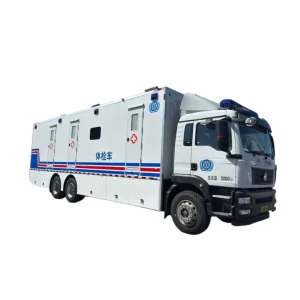
The healthcare infrastructure of Greater Sydney is navigating an era of unprecedented stress. Propelled by rapid suburban expansion across the Western Sydney corridor—particularly around the key growth centers of Penrith, Parramatta, and Campbelltown—traditional hospital facilities are experiencing severe capacity constraints. Concurrently, regional New South Wales (NSW) continues to encounter geographic barriers, resulting in inequitable access to primary healthcare, emergency screening, and dental services. Consequently, modular and expandable medical clinics are transitioning from a temporary contingency to a cornerstone of modern healthcare delivery.
Navigating BCA Class 9a Compliance & Australian Standards
Deploying modular clinical facilities in Sydney demands rigid alignment with Australian building regulations. Unlike general residential transportable spaces, medical clinics must satisfy Class 9a building guidelines under the Building Code of Australia (BCA). Class 9a regulations mandate stringent fire resistance, specialized mechanical ventilation (including positive pressure zones and HEPA filtration configurations), specific doorway clearance widths for stretchers, and step-free access paths compliant with AS 1428.1 (Design for Access and Mobility).
Additionally, electrical systems deployed in medical environments in New South Wales must be engineered in accordance with AS/NZS 3003 (Electrical Installations - Patient Areas). This standard demands distinct structural separation of electrical circuits, integration of Line Isolation Monitors (LIM), residual current devices (RCD) with specific trip profiles, and backup generator transfer switches. Our factory engineers work directly with Sydney-based certification authorities to ensure that every expandable frame exported from our facility is ready to clear local certification audits upon arrival at Port Botany.
Solving Off-Grid Challenges in Regional & Remote NSW
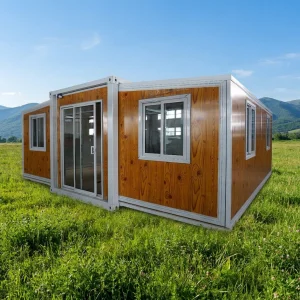
From the Hunter Valley mining regions to remote agricultural centers in Western NSW, access to grid-tied utilities is often limited or unreliable. Expandable container clinics provide an off-grid answer. Equipped with roof-integrated photovoltaic arrays, industrial battery banks, greywater recovery systems, and autonomous waste-management components, our structures serve as self-sustaining outposts. These systems ensure that life-saving diagnostics, maternal care, and emergency triage can proceed uninterrupted, independent of municipal grid status.